Is pest control safe for pets and children?
A Melbourne pest control team answers the safety questions we hear most
Label
Applied to label directions
Clear
Advice on when pets can return
Clear
Advice on when pets can return
Briefing
Before every treatment
Briefing
Before every treatment
The short answer: professional pest control is done with safety in mind
When licensed professionals like Insight Pest Solutions apply products to label directions, the risk to families and pets is reduced. The difference is precision. We use the right product, in the right amount, in the right places. Unlike DIY foggers that spread chemicals everywhere, professional treatments target the places pests hide and cut down contact with your household.
One of the most common questions we get from Melbourne families is how treatments work around children and pets. Here is what you need to know.
How Insight Pest Solutions protects your family
Targeted application methods
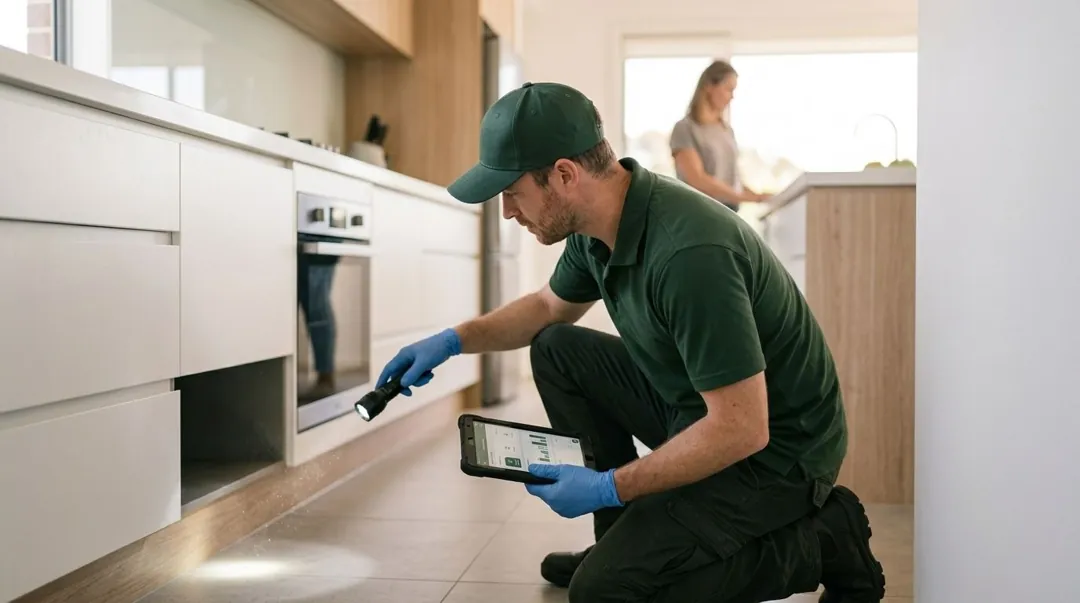
Products are applied in targeted, concealed areas: behind appliances, in wall cavities, along skirting boards and inside bait stations. Treatment is directed away from play areas, beds and food preparation surfaces.
Out-of-reach placement
We use gel baits, dusts and tamper-resistant bait stations that limit pet contact. Gel baits go into hairline cracks that pets can't reach. Dust is injected into wall cavities and roof spaces.
Safety briefing
Every Insight Pest Solutions technician explains the work before starting. That includes re-entry times, ventilation advice, pet precautions and specific instructions for homes with babies, toddlers or pregnant women.
Integrated Pest Management (IPM)
If you want to limit product use, ask us about IPM, which combines physical barriers, sealing entry points, cleaning up what attracts pests and targeted treatments where they are needed.
Types of products we use
Understanding what is used helps families make informed decisions. Here is an overview of the main product types Insight Pest Solutions uses in Melbourne homes.
Gel baits (ants)
Applied as tiny dots in concealed cracks and crevices. Ants carry the bait back to the nest, so it reaches the colony you can't see. Gel baits are placed where children and pets can't reach.
Residual surface treatments (spiders and crawling insects)
Applied to skirting boards, door frames and window sills, and outside at the foundation. Your technician will tell you how long to wait before people and pets touch the treated areas.
Dust formulations (wall cavities and roof spaces)
Injected into enclosed spaces like wall cavities, roof spaces and crawl spaces through small holes. The dust stays inside those spaces rather than in living areas.
Tamper-resistant bait stations (rodents)
Locked plastic stations designed so that children and pets can't reach the bait inside. They are anchored in place so they don't move.
Safety checklist for pest control at home
The checklist at the end of this section covers what to do before we arrive, after we leave, and if a pet or person is exposed.
Warning: DIY pest control can be riskier than a targeted professional treatment
Store-bought bug sprays and foggers spread product across broad areas, including surfaces children and pets touch, and foggers coat everything: countertops, toys, pet bowls. A targeted professional treatment puts the product in the cracks, voids and places pests travel.
What if a pet is exposed? Treatments are applied to label directions, but if your pet shows signs of exposure to a pest control product, follow the exposure steps at the end of the checklist.
Before: remove pet food bowls and water dishes from treatment areas
Before: cover fish tanks and turn off air pumps
Before: move children's toys off the floor and away from skirting boards
Before: plan for family and pets to be out for the time your technician gives you
Before: move caged pets and terrariums out of treatment areas
After: wait until treated surfaces are completely dry before going back in
After: open windows and doors to ventilate, as advised
After: avoid mopping treated skirting boards for as long as your technician advises
After: wash pet bowls before refilling them with fresh water
After: wipe kitchen counters before preparing food
Mild exposure (walking on wet surfaces): wash paws with warm, soapy water and watch for unusual behaviour.
Ingestion of bait: note the product name (it is on your treatment report) and contact your vet right away.
Symptoms to watch for: heavy drooling, tremors, vomiting or lethargy. Take your pet to the vet and bring the product information from your treatment report.
Pet and child questions answered
Is pest control safe for babies and toddlers?
We apply products to label directions with targeted methods and give you clear advice on when children can go back to treated areas. Our technicians always talk through the safety steps with you before treatment.
Can my dog or cat be in the house during pest control?
Pets should be out of the treated area during the visit and until surfaces are dry. Your technician will tell you when they can come back.
Are there options that use fewer products?
Yes. We can use Integrated Pest Management approaches that rely on physical barriers, sealing entry points, traps and cleaning up what attracts pests. Contact us to talk through options for your home.
How long after pest control can I let my kids play on the floor?
Wait until treated surfaces are completely dry. For floor-level treatments, your technician will tell you the exact time based on the product used.
Is pest control safe during pregnancy?
Tell your technician if anyone in the home is pregnant. We will explain the product and timing, and many people choose to stay away during the visit and until surfaces are dry as an extra precaution.
Are pest control fumes dangerous?
Our methods are targeted: gel baits, dust in cavities and spot treatments, rather than broad-area foggers. Your technician will advise on ventilation after the visit.
What about fish tanks during pest control?
Fish and other aquatic animals are more sensitive to pest control products than mammals. We advise covering tanks and turning off air pumps during treatment, and we can plan the work to avoid the room with the tank.